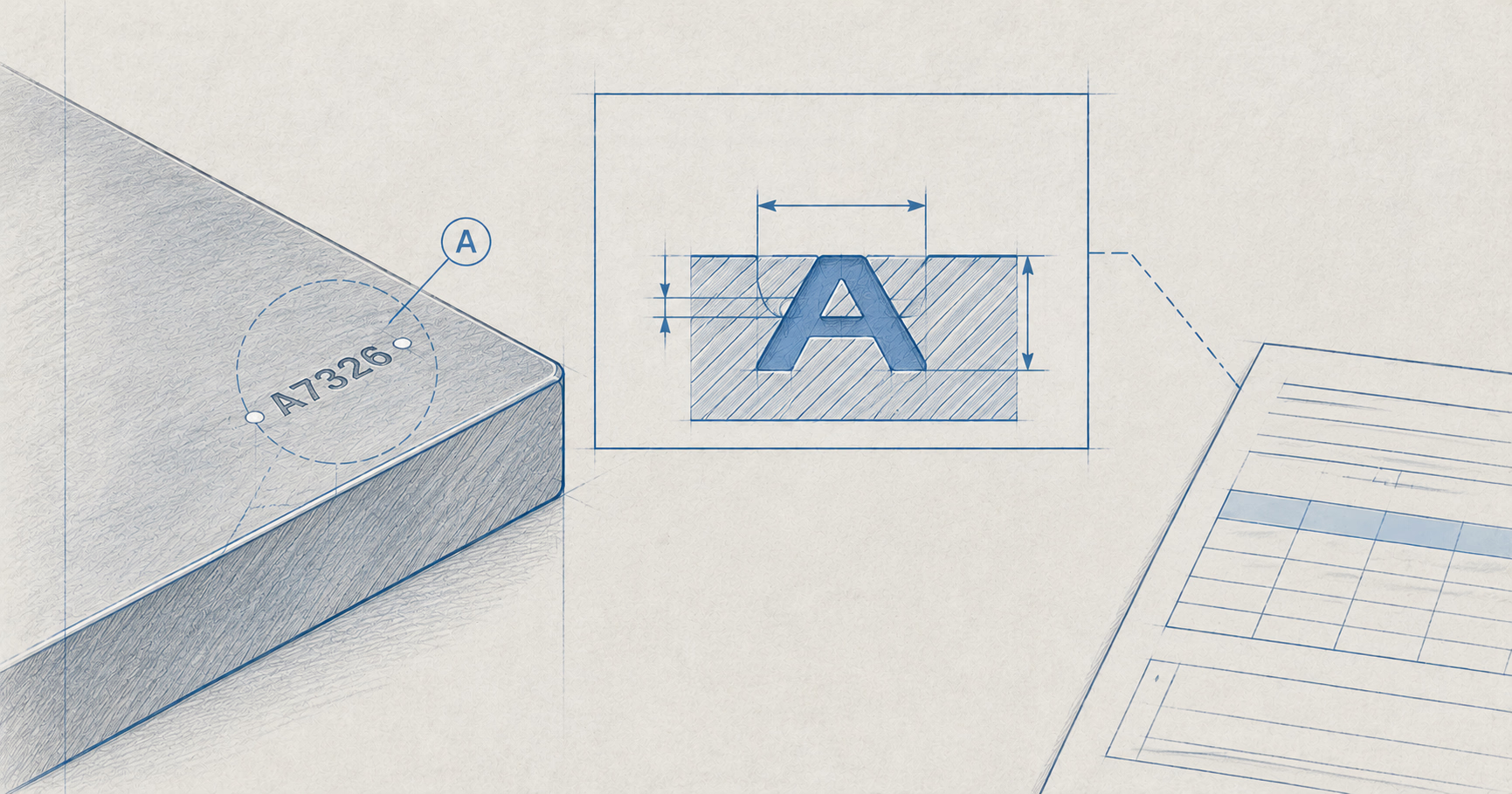
Genuine Hardox: matching the plate ID to the 3.1 certificate
Red primer proves little: Hardox is genuine when the ID stamped on the plate matches SSAB’s 3.1 certificate, a link that cutting to drawing breaks
News
At the December shutdown, the part to replace is the one that, at the wear rate measured between two readings, would not make it to the next shutdown.
Topics
hardox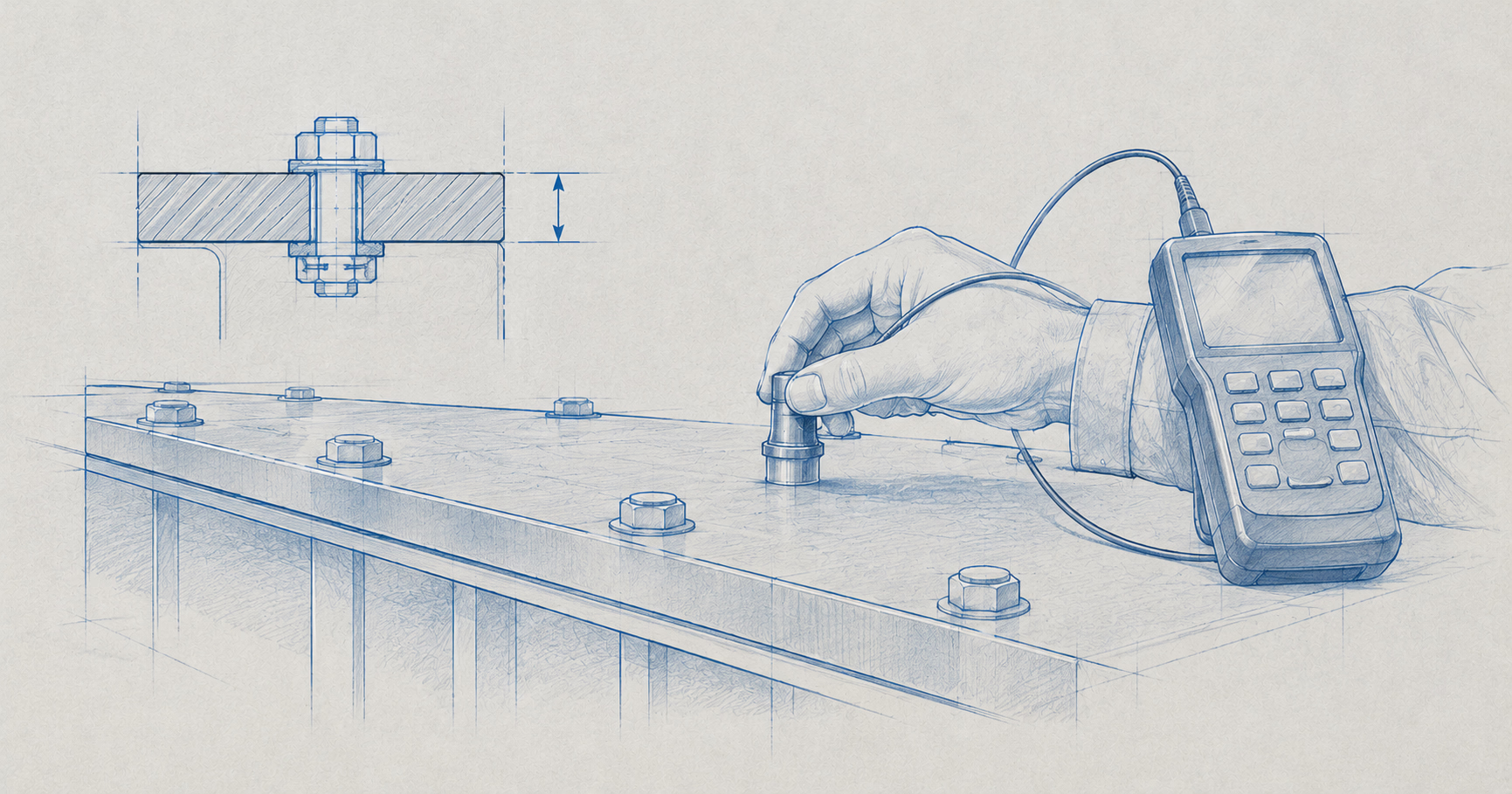
The shutdown over the year-end holidays is when a plant can renew liners, blades and hammers without taking hours away from production. What gets replaced is whatever, at the measured wear rate, would not last until the next shutdown, while the rest stays in place until the next thickness check.
For custom spare parts in Hardox wear plate, the order has to leave time to prepare the drawings, cut and deliver before the shutdown. In December the margin narrows, because the holidays shorten the working calendar. For a shutdown between Christmas and Epiphany (6 January), work on spare parts therefore starts in November, with the thickness survey.
The parts to measure are those in contact with the material, and the instrument varies with the plant area. SSAB, the maker of Hardox, names the ultrasonic thickness gauge as the usual check for truck bodies, buckets and liners: it reads the remaining thickness from one side, with the part still installed.
Crusher hammers, on the other hand, are measured with a ruler, and are usually replaced when the machine’s output drops to its minimum limit. The table summarises the parts, instruments and points to check in the most common areas.
| Plant area | Parts to measure | Instrument | Points to check |
|---|---|---|---|
| Loading and haulage | Dumper and truck bodies, loader buckets | Ultrasonic thickness gauge | Floor and sides of the bodies, bottom and sides of the buckets |
| Hoppers, chutes, feeders | Liner plates | Ultrasonic thickness gauge | Impact zone, sliding walls, thickness left above the bolt heads |
| Crushers and hammer mills | Hammers | Ruler and machine output | Hammer profile, output against the minimum limit |
Where the material arrives hot, as with clinker, thickness readings should be interpreted together with the operating temperature, because heat makes any steel softer and less wear-resistant. In recycling plants the same checks apply to roll-off containers, hoppers and shredders, and the dedicated article indicates the right grade for each component.
One measurement tells you how much thickness is left; two tell you how fast it is wearing. The manufacturer describes periodic gauge readings, at intervals of operating hours or loads, as the most common way to plan maintenance. For the values to be comparable, readings are repeated at the same points, marked on the part or on a sketch.
Comparing the wear rate with the hours left until the next shutdown shows whether the part will make it. The calculation only holds if the minimum thickness is right, meaning the limit beyond which the part must no longer be used, and that value changes from one component to another.
In a bolted liner plate, the minimum thickness depends on the countersink, because beyond that point the bolt head is exposed and starts to wear. In bodies and buckets, it is set instead by the strength the structure must retain, and has to be agreed with whoever knows the design. With that value and two readings, the choice between replacing the part and leaving it in place can be assessed together with the technical department.
A part that wears out early signals that the grade or the thickness cannot keep up with the plant, and the replacement is the moment to correct them. A harder grade extends the life of the part. The manufacturer warns, however, that the relationship between hardness and service life is far from linear, because a different steel often changes the wear mechanism as well.
On surfaces worn by abrasion, according to the manufacturer’s estimates, Hardox 600 fitted in place of a 500 HBW wear steel extends service life by up to 50%. Compared with a 400 HBW steel, service life can be up to four times as long.
Where impact dominates, a tougher steel is the better choice instead, and for liners the criteria for choosing between Hardox 450 and 500 apply. The guaranteed ranges, from HiTuf to Extreme, are summarised in the guide to Hardox grade hardness.
When the problem is time, the most direct lever is thickness, because for the same grade every millimetre above the minimum buys more operating hours. The gain has to be balanced against the weight of the plate and its fastenings. To estimate service life with a different hardness, the manufacturer offers a calculation tool, WearCalc, and the readings from the current part are the data to start from.
Switching material makes sense in specific cases. With fine abrasives sliding over the part, a chromium carbide overlay plate can outlast a quenched wear steel. With heavy impact or high contact pressures, however, the hard layer may chip or come away. Where blows alternate with sliding, through-hardened quenched plate avoids that risk.
During the shutdown, spare parts have to be fitted quickly, and every decision made beforehand on the drawing shortens the work on site. In the manufacturer’s guidance on liner plate size, a plate to be handled manually should not exceed about 25 kg, the weight of a 400 × 400 × 20 mm plate. Hardox 600 helps keep below that weight without sacrificing service life.
With cranes or lifting devices, plates up to 500 HBW can be made larger, cost less to produce and are quicker to install. They also have fewer cut edges, where the heat of cutting softens the steel, as the guide on the heat-affected zone left by thermal cutting explains. According to the manufacturer, installation planned around lifting lugs can cut the shutdown by more than half. The mass of each plate at the chosen thickness can be checked in advance with the plate weight calculator.
For fastening, the most common solution is the countersunk bolt, whose head sits recessed in the plate and is thus protected from wear. In the most exposed areas, the manufacturer’s bolting recommendations call for a deep countersink, so that the head is not exposed before the plate is worn out. Bolt property class and alternatives such as welded studs are chosen on the drawing, together with plate size and weight.
Solsider oxy-fuel cuts Hardox from DXF or DWG drawings, with stock geared to quick-turnaround jobs. Plates to be welded can arrive already flame-bevelled, and those for curved liners already bent or rolled, as described on the oxy-fuel cutting and processing to drawing page.
The order date is worked out backwards from the installation day, subtracting the duration of each stage back to the thickness survey.
This winter’s Italian public holidays fall on Tuesday 8, Friday 25 and Saturday 26 December, then Friday 1 and Wednesday 6 January. These days have to come off the calendar of everyone who cuts, transports and installs.
Cutting and delivery times depend on grade, thickness, quantity and processing, and the technical department confirms them with the quotation, working from the shutdown date given in the request. From its base in Montebelluna, in the province of Treviso, Italy, Solsider delivers daily across Veneto, Friuli, eastern Lombardy and Trentino.
In short, replace in December the parts that, at the measured wear rate, would reach the end of their life before the next shutdown. Place the order early enough to cover drawings, cutting and delivery, net of the holidays.
The available grades and processing are summarised on the Hardox wear-resistant steel plate page. For an assessment, you can send your readings and drawings to the technical department with the shutdown date, and you will get a reply within 24 working hours.
How does an ultrasonic thickness gauge work?
The probe sends an ultrasonic pulse into the plate and measures the time taken by the echo returning from the opposite face, from which the instrument calculates the thickness. It must be calibrated on a sample of known thickness of the same steel, and a couplant gel is needed between the probe and the surface.
Can Hardox be welded during the shutdown?
Yes, and the December cold calls for one extra precaution. Below an ambient temperature of 5 °C, or in high humidity, the manufacturer asks for the minimum preheat for the grade and thickness to be raised by 25 °C. Filler metal, preheating criteria and interpass temperatures are summarised in the welding section of the guide What Hardox is.
Should you keep a stock of spare wear parts?
A stock is needed for the parts that wear fastest and for those that would stop the whole line if they failed. The number of parts to keep in stock depends on the measured wear rate and on the delivery times the technical department confirms with the quotation.
Red primer proves little: Hardox is genuine when the ID stamped on the plate matches SSAB’s 3.1 certificate, a link that cutting to drawing breaks
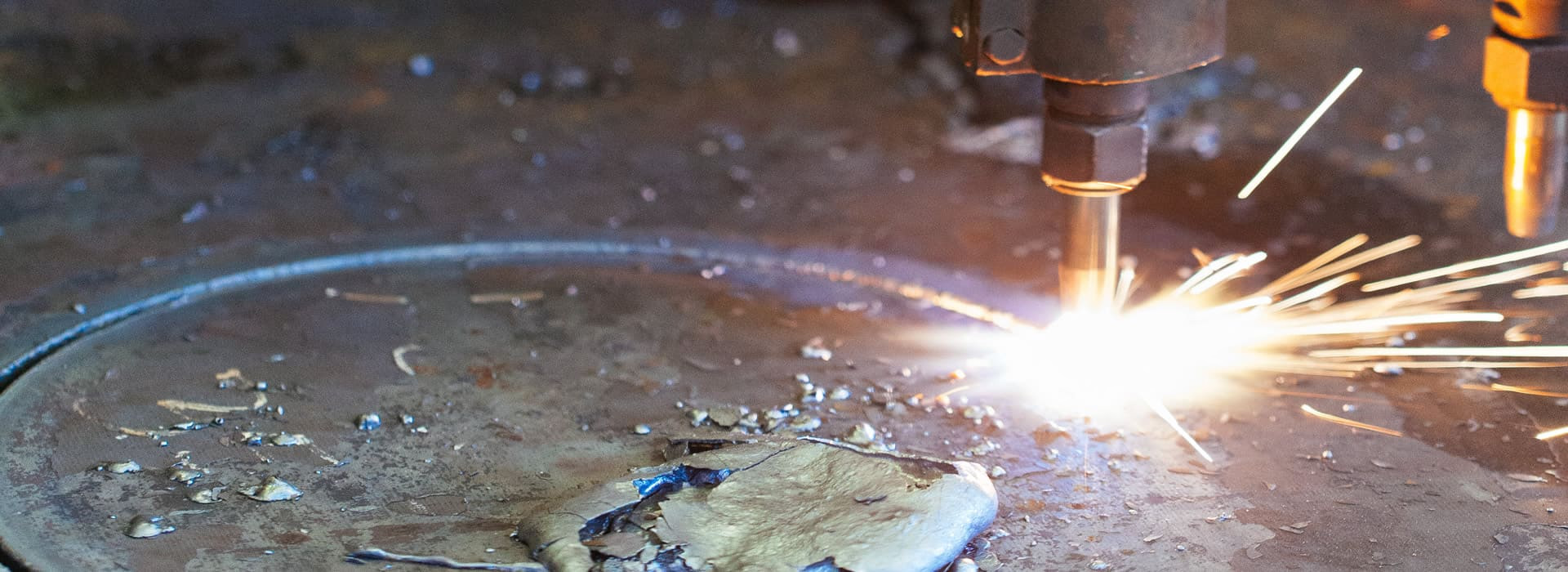
Hardox 450 or 500: how the wear mechanism, the return on each hardness step and workshop processing determine the correct grade for each application.
Contact our technical office for an assessment of your supply or processing needs. Guaranteed response within 24 hours.