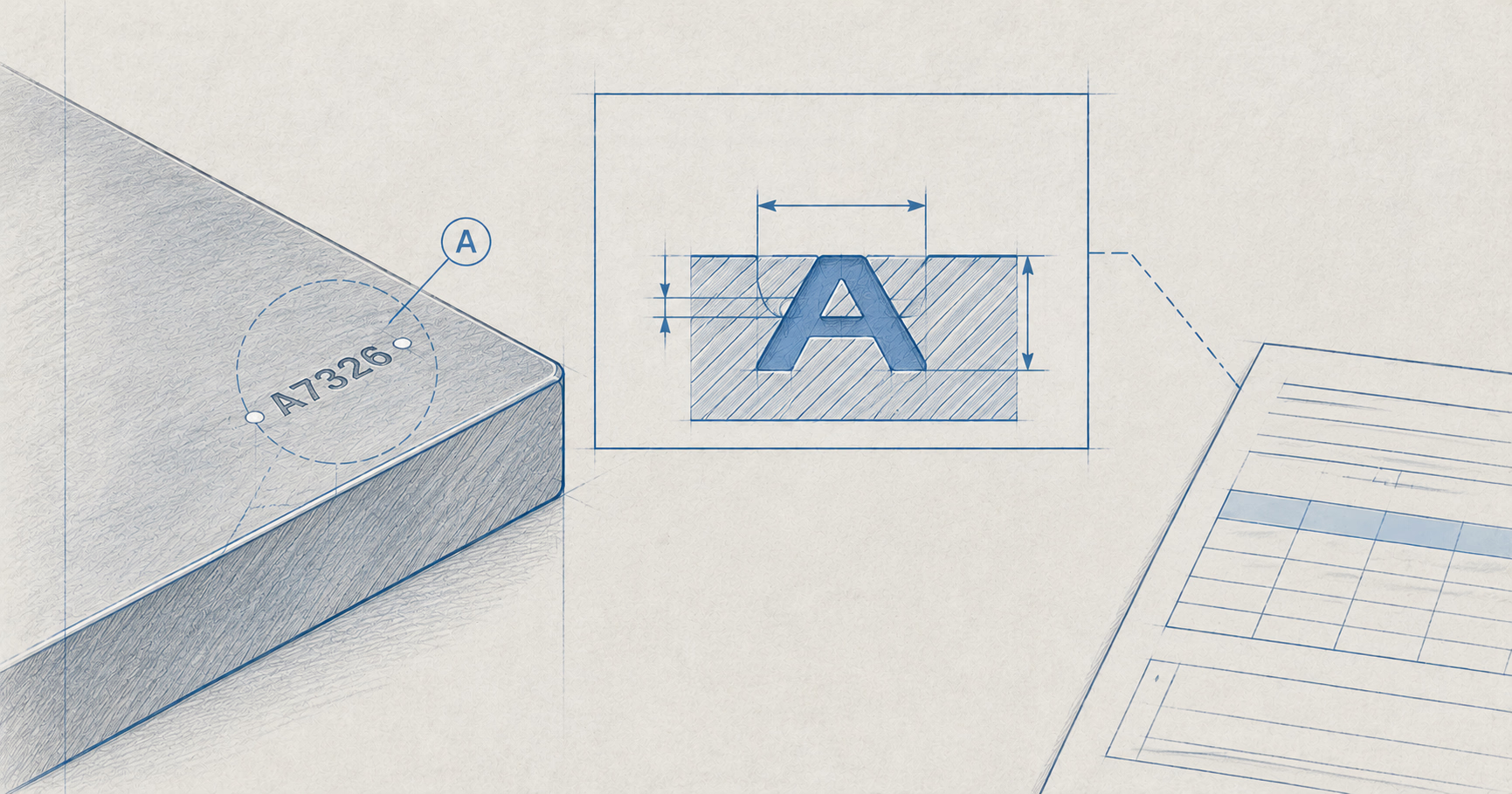
Genuine Hardox: matching the plate ID to the 3.1 certificate
Red primer proves little: Hardox is genuine when the ID stamped on the plate matches SSAB’s 3.1 certificate, a link that cutting to drawing breaks
News
In the same shredder, the knife and the rotor need different Hardox grades: the knife must hold its edge, the rotor must absorb impact.
Topics
hardox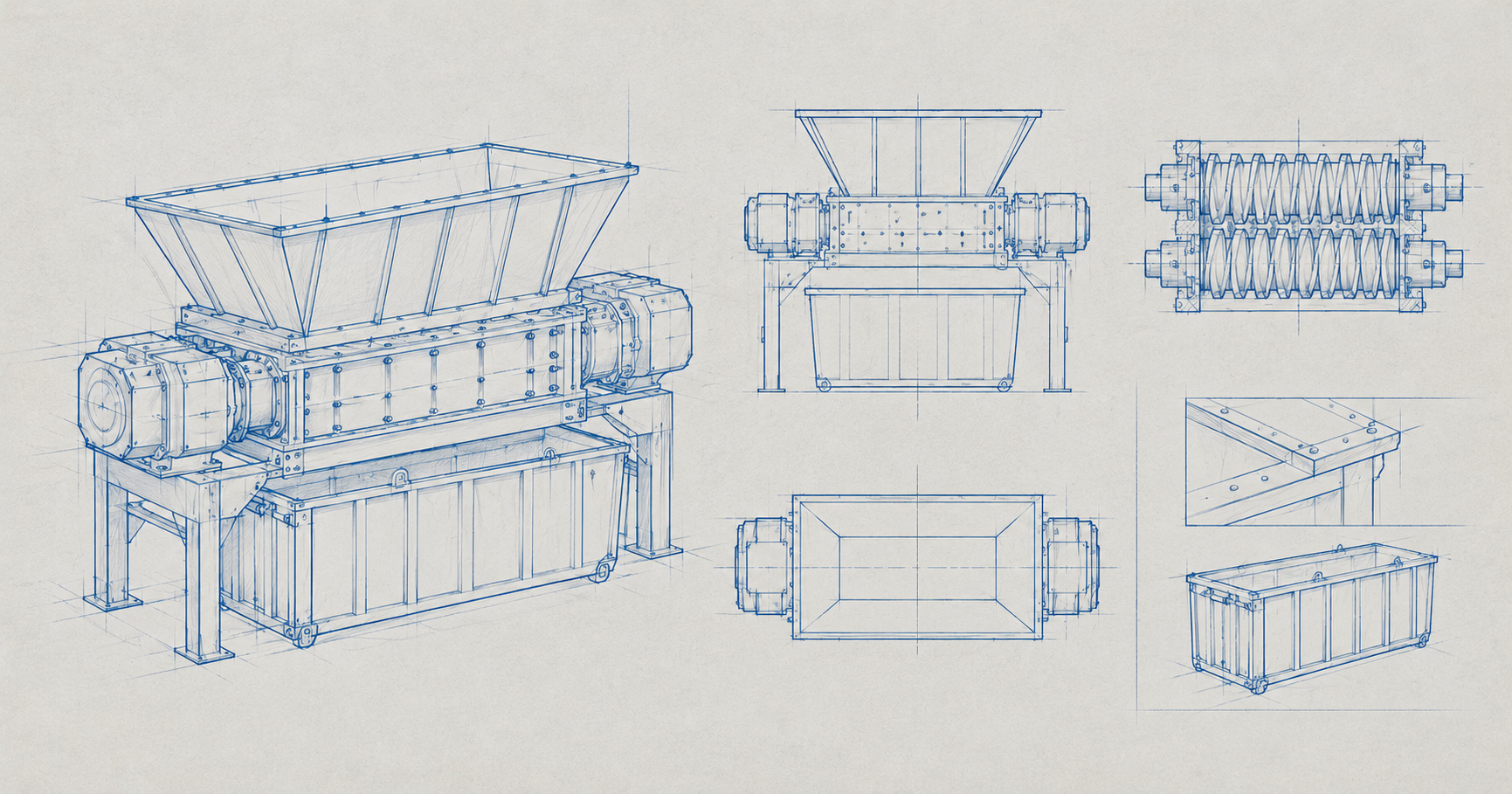
From the collection container to the shredder knives, a recycling plant subjects steel to sliding wear, impact and cutting, and, with wet waste, to corrosion as well. The grade of Hardox plate is therefore chosen component by component, so much so that very different steels work side by side on the same line, from HiTuf in the rotors to Extreme in the knives that shred plastics.
SSAB, the Swedish steel group that makes Hardox, groups its grades by type of wear. Where the plate also carries structural loads, as in containers, buckets and rotors, it recommends the tough grades, from HiTuf to 500 Tuf. The hardest, from 500 to Extreme, go to wear parts with limited impact, such as knives and the liners most exposed to abrasion.
For wear combined with corrosion, typical of wet or acidic waste, the manufacturer developed Hardox HiAce. The table maps these recommendations onto the areas of a plant, from collection to wet separation. Guaranteed hardness values and the thicknesses produced are summarised in the guide on how to read Hardox grades.
| Plant area | Components | Main type of wear | Starting grades |
|---|---|---|---|
| Collection and transport | Roll-off containers, refuse compactor bodies | Sliding and impact from the load, corrosion with wet waste | 500 Tuf and 450; HiAce with wet or acidic waste |
| Loading and handling | Hoppers, chutes, buckets | Impact in the drop zone, abrasion along the walls | 450 as the general choice, 500 Tuf for heavy impact, 550 and 600 bolted onto walls with severe abrasion |
| Shredding | Knives, hammers, rotors, discs | Cutting, repeated blows, abrasion | 500 and 550 for knives, Extreme with plastics and cables; 550 for hammers, Extreme with plasterboard; HiTuf for rotors and discs |
| Wet separation | Screens of washing and separation drums | Abrasion with corrosion | HiAce |
These are starting points, which the material processed and each plant’s maintenance intervals may shift towards a harder or a tougher steel.
In a roll-off container the wear plate also acts as the structure, and the grade chosen determines both its service life and its tare weight. For containers that receive steel scrap or reinforced concrete from demolition, the manufacturer recommends Hardox 500 Tuf, which combines the hardness of 500 with the workability of 450.
In the manufacturer’s calculations, run with its WearCalc and TippCalc software for sliding wear with granite, 500 Tuf lasts up to twice as long as Hardox 400. Impact toughness remains guaranteed at low temperature, at 27 J at −20 °C, and the bending recommendations are similar to those for 450.
A plate that carries the load also makes reinforcements unnecessary. Finnish manufacturer Ferreus builds hook-lift containers in 500 Tuf without uprights or support beams, with fewer components and a lower tare weight. According to the owner, the payload gain varies with the product and the application, and on a truck-and-trailer combination it can exceed 2,000 kg compared with a conventional steel design.
The same principle applies to Hardox 450. In a manufacturer’s reference design for a scrap container, removing the reinforcements cuts the weight of the redesigned parts by 35%, from 4,020 to 2,620 kg. In the same calculation, service life goes from 6 to 12 years. The mass of the floor and side walls can be estimated beforehand with the weight calculator.
With municipal waste, the plate suffers corrosive wear, that is abrasion and corrosion together, because leachate makes the environment acidic in refuse compactor bodies and containers. Hardox HiAce has the same hardness as 450 and, in a non-aggressive environment, wears at the same rate as that grade, but it gains service life when abrasion acts together with acids.
In the manufacturer’s in-house tests, under abrasive conditions at pH 4, HiAce lasted up to 20% longer than AISI 304 stainless steel. Compared with a generic 400 HBW wear steel, its service life is twice as long. These are relative values, which the manufacturer itself says should not be taken as guaranteed for any individual application.
On a collection vehicle belonging to the Swedish company Allmiljö, the 304 stainless floor was replaced with 5 mm HiAce plate. After six years and 106,000 km, the wear measured at the most exposed point was 2.06 mm, about 40% of the original thickness. No pitting corrosion appeared, which according to the manufacturer usually leads to leaks, unplanned maintenance and early floor replacement.
Shirakawa Tekko, one of Japan’s largest builders of hook-lift containers, has likewise replaced the same type of stainless steel with HiAce. With thinner plate, it cut weight by up to 35% and welding by up to half.
The same grade reappears further down the line, in wet separation, where process water makes the environment corrosive. At the Stena Recycling plant in Halmstad, Sweden, large drums wash and separate non-ferrous metals at a rate of around a thousand tonnes of material a day.
The drums’ screen segments, made from 4 mm HiAce plate slotted to let the water through, last up to three times as long as the stainless steel segments they replaced. The site manager estimates that maintenance has been cut by around 70%.
In hoppers and chutes the plate acts as a wear liner: it protects the load-bearing structure and is replaced at the end of its life, with a service life that depends mainly on hardness and thickness. In its liner recommendations, the manufacturer describes 450 as versatile: it can be cut and welded on site and lends itself to drilling and countersinking for fasteners.
In the impact zone, where the load drops into the hopper, 500 Tuf is the better choice, recommended by the manufacturer for its toughness. Hardox 550 and 600, suited to the most severe wear, often complement a 450 or 500 lining in the areas of greatest abrasion. For the base grade, the criteria for choosing between Hardox 450 and 500 apply, illustrated with worked examples in the dedicated article.
Despite their hardness, the 550 and 600 grades can be cut, drilled and machined. They must, however, be mounted on a rigid, well-maintained backing, in small plates that limit bending and residual stresses. Smaller plates also mean more cut edges, which the heat of cutting softens, as the guide on how thermal cutting affects the edge explains.
Buckets, unlike liners, are structural components, and according to the manufacturer those made of 500 Tuf last almost 50% longer than 450 ones. The users it cites include the Italian company MB Crusher for crusher buckets, and Hardox is also offered for recycling grapples.
In a shredder, each part needs a different balance of hardness and toughness. The knife must keep its edge without chipping, and the rotor must absorb blows without cracking.
Knives and hammers. For knives, the manufacturer names Hardox 500 and 550 as common choices in recycling, and 550 also features among hammer materials. Again according to the manufacturer, 550 fitted in place of a generic 500 HBW wear steel normally lasts 30% longer.
With the most abrasive materials, the step up is to Hardox Extreme, the hardest grade in the range, with a nominal 60 HRC and thicknesses from 8 to 19 mm. The manufacturer recommends it for knives that shred plastics and electrical scrap such as cables and synthetic materials, and for the hammers of crushers that recycle plasterboard.
In glass recycling, in laboratory tests with cullet taken from a Swedish plant, Extreme outperformed solutions such as chromium carbide overlay. The follow-up trial at a Scottish plant delivered longer service life and lower life-cycle costs.
Rotors and discs. Here toughness takes priority, and the manufacturer recommends Hardox HiTuf, with guaranteed impact toughness of 40 J at −40 °C. Australian manufacturer Pacific Shredder builds the inner parts of the rotors in its car shredders from 100 and 120 mm HiTuf plate. In these machines the rotor weighs 60 t and is made up of eleven discs, and removing it for repair takes a 200 t crane.
A component that fails suddenly stops the line until the replacement arrives, whereas the same job, planned ahead, is done at the next available shutdown with the part already in the workshop. That is why it pays to measure the remaining thickness at every inspection and to order the Hardox replacement when the wear shows the part is nearing the end of its life.
A quotation for a spare part made to drawing starts from four pieces of information.
Solsider is based in Montebelluna, in the province of Treviso, Italy, has been trading steel since 1927 and delivers daily across Veneto, Friuli, eastern Lombardy and Trentino. Hardox is supplied in standard plate sizes or oxy-fuel cut to size from DXF or DWG drawings, with stock held for quick-turnaround jobs. When needed, the part leaves the workshop already flame-bevelled, bent or rolled, as described on the cutting and processing to drawing page.
In short, start from the main type of wear on each component. Tough grades go to the parts that carry loads and impact, the hardest to those worn by abrasion, and HiAce to areas with wet or acidic waste.
The grades and processing Solsider offers are collected on the Hardox wear-resistant steel plate page. For a quotation, you can send the drawing or dimensions to the technical department, which replies within 24 working hours.
Red primer proves little: Hardox is genuine when the ID stamped on the plate matches SSAB’s 3.1 certificate, a link that cutting to drawing breaks
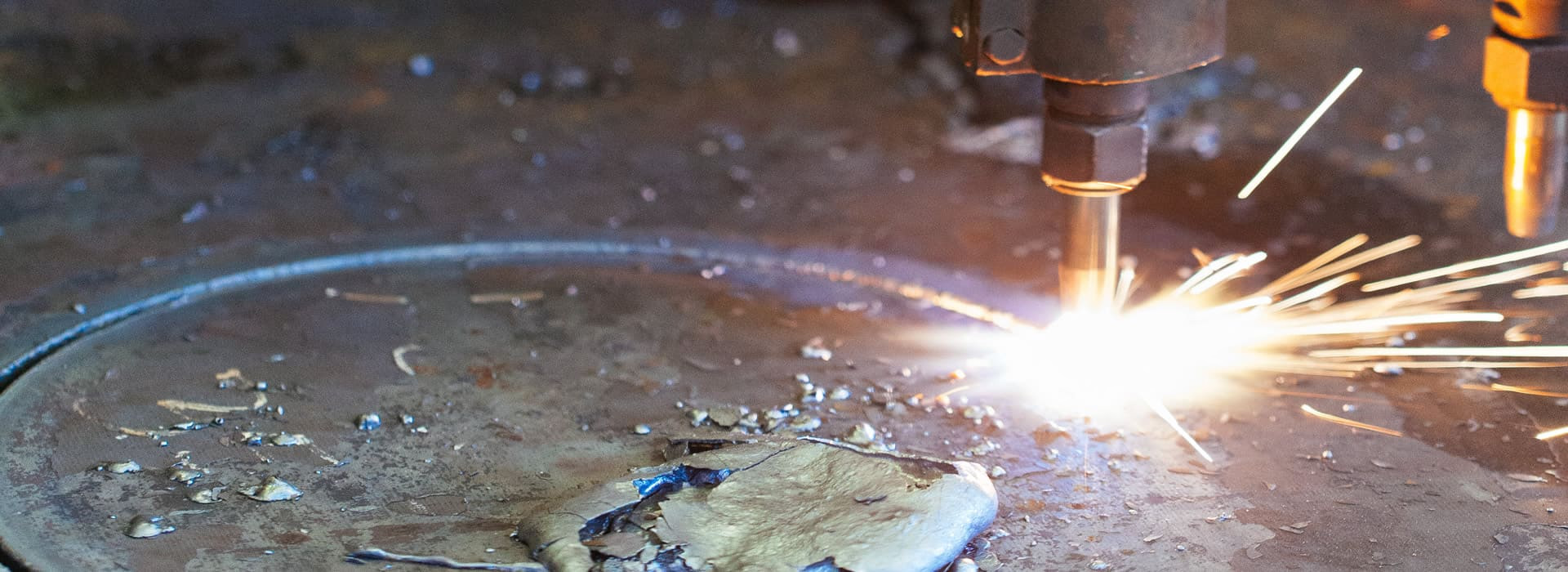
Hardox 450 or 500: how the wear mechanism, the return on each hardness step and workshop processing determine the correct grade for each application.
Contact our technical office for an assessment of your supply or processing needs. Guaranteed response within 24 hours.